

INDIA’S IRANIAN POLICY CONNUNDRUM
Amongst all of India’s historic and contemporary , Immediate as well as peripherals neighbours , the country that has arguably shared the highest level of mutually trancedental cross-cultural religious , ethnic , linguistic and affiliational ties with India , has been Persia .
Both countries also do share similarly sounding as well as meaning Endonymic names Eranshahr and Aryavrata respectively , both broadly meaning land of the Aryans in the Sanskrit and Persian languages , attesting to their’s shared Civilisational ancestry roots .
In regards to both the above-mentioned countries more recent relations , the then Pahlavi government of Iran recognized the newly independent Indian State on the 15 March 1950 .Unfortunately on account of the two countries being positioned and placed on the opposite sides of the Cold War arena , in addition to the substantial diplomatic and military support provided to Pakistan by Iran , in the first three decades following the establishment of relations , there wasn’t any significant or worthwhile co-operation between the two countries .
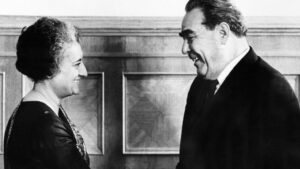
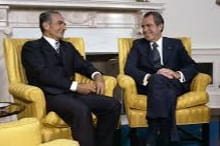
After the Iranian revolution , and the subsequent regime change in Tehran ,despite the vaguely common anti-Western ( Imperialist ) stance of both the countries , there still wasn’t any significant uptick or improvement in bilateral ties . The chief amongst them being India’s tacit support for Iraq during the Iran Iraq war , India and Iran supporting opposite sides during the 1980s Afghan war and India’s staunchly Secular Congress government’s weariness and distrust towards Political Islam .
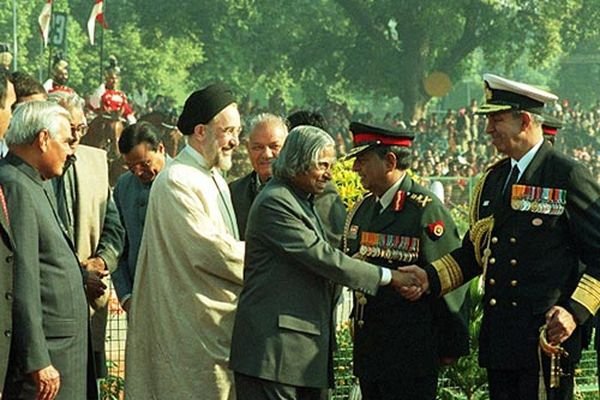
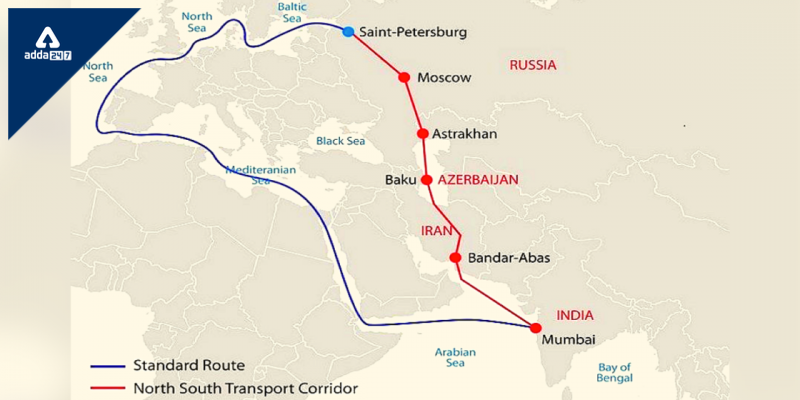
It was only since the mid 1990s , that the level of Bilateral co-operation and exchanges increased significantly , with the first proposals for the inaugural development of the International North-South Transport Corridor ( INSTC ) being formalized . The already-bettering relations were significantly enhanced after the visit of the then Iranian President Sayyid Mohammed Khatami to India in January 2003 , along with signing of ” Tehran Declaration ‘ .
The two central pillars of Indo-Iranian ties since then , have been the Oil&Natural gas trade between the two countries and the plethora of issues surrounding the INSTC connectivity route . In regard to the Oil trade , the underlying importance for India stems from the fact that for a very large emerging economy with GLOBAL AMBITIONS to sustain and further expand , energy security is a must , while for the heavily Sanction-hit Iranian economy , India offers a very crucial selling market ( very large ) for Iran , to alleviate to a certain degree it’s economic troubles , besides a relatively strong and important ally , in the former’s efforts to fight against American-led efforts to full-fledgedly isolate it at the International stage .
Nonetheless , there’re certain almost ireconciliable differences , in regards to the policies pursued by both the countries . Those differences are as follows –
- The significant reduction in the volume of India’s oil imports , following America’s unilateral withdrawal from the JCPOA treaty , and the application of the CAATSA act .
- by and large , India’s lacklusture investment and ground-level utilization of it’s stated promises in Iran .
- The Iranian government’s non-renewal of ONGC Videsh Limited’s Contract to develop the Farzad – B gas field ( containing estimated gas reserves of more than 19 Trillion Cubic feet ) , instead awarding the Contract to Petropars , a domestic Iranian gas company .
- India being a constitutive Member-state of the I2U2 grouping .
- Iran’s occasional criticism of India regarding the Kashmir issue .
The relationship between the two countries , is to a very significant degree influenced by each one’s relationship with several other regional as well as global powers . With regards to India the influencing dynamics are as follows –
a) India’s ever growing closeness with the United States following the end of the Cold war , has been a big hurdle in the way of the improvement of Indo-Iranian ties .
b) On an almost parallel note , India’s rapidly improving ties with Israel , has also harmed the India-Iran’s prospects of greater collaboration . In recent years , Israel has become one of India”s most important providers of armaments and a key technology partner in extremely diverse domains such as Space , agriculture , Cybersecurity etc .
c) Lastly yet most importantly , the economic links between India and the Gulf Arab states have grown by leaps and bounds . Millions of Indian nationals live and work in the Gulf and the remittance sent by them is extremely crucial for the Indian economy .
In regards to Iran , it’s growing relationship with China especially so to counteract the US policy of applying ” Maximum Pressure ” through financially crippling sanctions should and must be paticularly emphasized as a significant deterent in the in the way of the growth of Indo-iranian ties .
Iran’s proximity with China is further reenforced by the simple yet extremely important fact , that China unlike India ( due to it’s significantly greater diplomatic and economic capabilities ) is able to defy Western sanctions to a much greater degree , and continue purchasing large amounts of Oil from Iran while also regularly providing vital diplomatic support to the country at International forums and platforms .
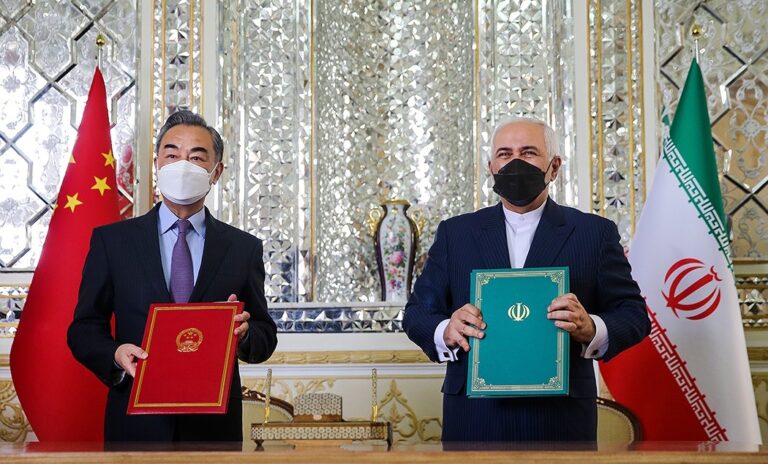
The above-described situation was paticularly exemplified on the 27March 2021 , when Iran and India signed a 25 year agreement to deepen their relations to the level of a ” Strategic partnership ” . In the agreement , China has committed to investing a sum of upto 400 Billion $ in Iran , over the next 25 Years on a number of projects and initiatives .
The major strengths of the Indo-Iranian relationship are as follows –
a) The commonly shared aim of both the countries to make the World a truly multipolar place .
b) The perfectly in line stance of both India and Iran in their joint opposition and vigilance towards Pakistan supported terrorist activities , inside their’s sovereign territory .
c) As indicated long back by the inauguration of the INSTC project , the keen desire of both the nations to re-start and re-invigorate trade and commerce along the north-south lanes of the ancient Trans-Eurasian silk route .
d) Though often overlooked in Mainstream Media focuses , the existence of a significant degree of people-to-people contacts and ties between the two countries, is also a very strong supporting pillar of this relationship .
The main impediments , in the way of further improvement in the two bilateral relationship , are as follow –
a) The Indian government and Private sector’s general recalcitrance to purchase Iranian oil&natural gas in paticular , amongst a plethora of other products and commodities , as it’ll amount to open flouting of American-imposed sanctions .
b) The Indian government’s de-facto abandonment of the Iran-Pak-India gas pipeline project .
c) India’s greater prioritization of it’s relations with Israel and the Gulf Arab states , at the cost of Iran , due to it’s more vital economic interests .
d) The Iranian government refusal to end it’s support ( in various forms and capacities ) for the many , many destabilizing Supra-state/non-State proxy groups throughout the Middle East , which further fuels and fosters tensions in an already turbulent region , acting as a significant deterent to further investments in the region .
The
opportunities that could and can be possibly realised , if Indo-Iranian ties
are further straightened towards the right track –
a) If the
INSTC deal , is operatioanlized to it’s full potential , it could possibly
bring down the prices of a lot many goods and commodities , due to
Product\material transportation times being reduced to roughly 3 weeks ,
from the current 60 to 75 days taken from Europe to India .
b) If the
Western-led sanctions on Iran are fully lifted for the long-term and the
Iranian economy is allowed to develop to it’s real potential , Iran could
provide the various emergent Indian Multi-National companies , with a
moderately large-sized market to sell their goods and services .
c) Through
continued engagement with Iran , India would also be able to invest in
Afghanistan ( especially in the country’s Rare-earth minerals and Hydrocarbon )
sectors , thus promoting mutually beneficial commerce , that enriches all the
three States .
d) An
enhanced level of Indian-led commercial interactions with Afghanistan and Iran
, in addition to the relatively-peripheral and authoritarian-ly administered
countries of the wider Eurasian region, might intiate a chain reaction by
encouraging other Global-South economic powers to follow suit and further
invest in this scarcely-Globalized region , therby initiating a cycle of
greater Monetary flows .
The
probable dangers that might befall , if this extremely crucial Bilateral
relationship is destabilized , are as follows –
a) As Iran
inspite of it’s many lackings and short-comings is one of the finger-few
politically Stable states in West Asia , so if the country is ever invaded that
the whole of the Middle East might be destabilized ( as evidenced in the
recently fought Israeli-Palestinian war ) , which would be deadly-dangerous for
India’s Commercial interests in the Middle-East , as well as the safety of the
millions of Indian nationals living there .
b) Ensuring
Iran’s economic development and progress and especially ( National-Political
stability ) is neccessarily important for India , as Iran acts and is an
Indian-friendly State , on Pakistan’s western flank , therby completing the
geo-political isolation of Pakistan on all sides except the Chinese border .
Therefore , any weakening in Iran’s sovereignity policing and Power-projecting
capabilities , would be to Pakistan’s benefit , as it’ll then be able to free
up many key resources , currently focused towards it’s Western flank .
c) As our
honourable and exremely wise Incumbent External Affairs Minister S Jaishankar
has repeatedly and steadfastedly mentioned about India’s uncompromising
commitment to the realization of a Multi-polar and ”
substantiatively_equilative World order ” in his book ”
The India Way ” , it is again in the country’s vital interests for Iran to
survive and if possible thrive , as inspite of it’s multitudes of internal and
external problems , Iran is and acts as a firm deterent in the way of the
absolute imposition , of the Western ( US ) led hegemony in the Middle East .
d) As Iran
is a resonably large State that has a lot of diverse linguistic , ethnic ,
religious , confessional and other kinds of groups composing it’s 84
Million-strong population , it’s dismemberment might initiate a Chain-reaction
, sparking a whole new wave of Balkanizing in the Middle-East , and perhaps
South-Asia too .
In regards
to the broad overall context , it may be understood that Iran is one of the
most complex relationships to manage , which the ” Modern Indian State
” has thus far largely succeeded in ” delicately balancing and
pursuing ” . That said , there’s now a pressing need for the two nations ,
to look and act towards the direction of those areas , where there’s mutually
beneficial convergence of key-interests between the two .
Lastly , it
must be stated , that if India really aspires to become an additional Permanent
member of the UNSC , it neccessarily needs not to be dictated by the whims and
fancies of other Great Powers , and thus ( in practice ) pursue a mostly
self-interest serving and fulfilling , Foreign policy course of it’s own
.
Insightful
Very Nice Blog!
Commendable piece of work.
The level of knowledge you put in your article is appreciated 👍 you have expressed your article with clarity, eloquent and force.
Excellent perspective. Insightful and comprehensive.
Very nice article. It covers the vast history of Iran and India and its ups and downs. Lots to learn from this article
Article is excellent and writer keep his keen eyes each & every aspect. And discribed 3 decate Indi-Iran relationship very beautifully.
Excellent work 💯
Excellent piece of writing 👏. Covering almost every aspect since the inception of the bilateral relationship between India and Iran😊
The way you described all things are very good.
Very nice content and also in good detail
Very good article, it is providing good detail and also clearing some important historical points.
This is a very insightful and well-articulated article on India’s Iranian Policy Conundrum. The analysis clearly highlights the strategic, diplomatic, and economic complexities that India faces in balancing its relations with Iran while managing its partnerships with other global powers. The discussion on regional geopolitics, energy security, and connectivity projects adds significant depth to the subject. Such thoughtful writing helps readers better understand the delicate balance India must maintain in its foreign policy. Excellent work and a commendable effort in presenting a nuanced perspective on this important issue.
Insightful
I really enjoyed reading this article. The writing is clear, smooth, and easy to follow, even though the topic itself is quite complex. Anant explains the situation in a very balanced and thoughtful way, which keeps the reader engaged throughout. The language feels natural and well-structured, making the ideas easy to understand. Overall, it’s a well-written and insightful piece.
Good content ..
Thank you so much for this excellent article which provides more knowledge about history of India and Iranian relationship 😇
This excellent article provides better knowledge about history of India and Iranian relationship
Amazing article . Covering every aspect from starting of this bilateral relationship between India and Iran.
very nice written blog
Very informative
nice and informative blog, well reserched